
Menu
Springfield Concrete Driveway Installation: What to Know First
Concrete Driveway Springfield
Planning a concrete driveway installation in Springfield requires understanding local regulations, climate considerations, and proper specifications. Massachusetts building codes mandate specific requirements for residential driveway construction, while Springfield’s unique soil conditions and freeze-thaw cycles demand careful material selection. Professional driveway installation Springfield MA projects must comply with city permit requirements and state construction standards. Understanding these factors before starting your project ensures long-lasting results and avoids costly mistakes. Proper planning addresses everything from soil preparation to concrete specifications, creating a durable surface that withstands New England weather conditions.
Understanding Springfield’s Permit Requirements
Beginning with Springfield’s Building Code, most residential concrete driveways are constructed as private property (non-commercial) projects; therefore, they do not usually require building permits from the City of Springfield’s Department of Inspectional Services. Nevertheless, there are certain conditions that could necessitate a permit. These include: Any structural alterations made to the driveway when the driveway connects to public sidewalks or streetways, or when the driveway impacts the drainage pattern of an adjacent property or streetway.
The City of Springfield’s Department of Public Works is responsible for commercial driveways and any driveways that encroach into the public right-of-way. The Springfield Department of Public Works also issues street-occupancy permits when the construction of a driveway will impede the flow of vehicular traffic in the public street during the time that concrete trucks and/or equipment are on-site. Additionally, properties located near Springfield College or in the downtown area of Springfield have specific regulations governing the placement of driveways due to heavy vehicular traffic volumes and pedestrian safety concerns.
When Permits Are Required
In addition to driveways connecting to new construction and driveways requiring utility hook-ups, the City of Springfield has a requirement for driveways to obtain permits if they impact the stormwater management system in the Connecticut River Watershed and require review and approval from the Springfield Conservation Commission. All driveway permits must be obtained before commencing work on the driveway.
Concrete Specifications
Due to Springfield’s freeze-thaw cycles, it is recommended to use air-entrained concrete with at least 5% air content to protect the concrete from frost damage. For standard residential driveways, a 4,000 psi compressive strength is sufficient; however, a 4,500 psi compressive strength will provide better durability for driveways built in the Massachusetts climate. Air entrainment will prevent water from entering the concrete and subsequently freezing within the concrete, causing damage.
As Springfield is often subjected to extremely low winter temperatures, especially in the area surrounding Springfield Technical Community College, it is essential to incorporate air entrainment into the concrete-mix design. According to the Massachusetts Department of Transportation, a specific mix design should be used when constructing driveways in Massachusetts, taking into account local aggregate availability and weather patterns.
Slab Thickness and Reinforcement
A standard residential concrete driveway should be no less than 5-6 inches in thickness for maximum durability. Passenger vehicles generally require a minimum of 4 inches of thickness, although greater thickness will provide longer durability. Wire-mesh reinforcement should be installed in the bottom third of the slab to prevent cracks from propagating through the slab.
If you live in the Forest Park Recreation Area, which has heavier vehicle usage, you may want to consider using a 6-inch thickness with rebar reinforcement for added durability. It is essential to properly place the wire-mesh reinforcement to maximize its effectiveness.
Base Preparation and Soil Conditions
Springfield is situated in the Connecticut River Valley, creating varying soil conditions that affect the driveway-planning recommendations. Clay soils, which are prevalent in the East Springfield area, will require additional base preparation and consideration of proper drainage. Proper compaction will help to prevent settling of the concrete and resultant cracking.
The granular-base material should be a minimum of 4-6 inches deeper than the bottom of the concrete slab. A well-drained gravel base will provide a solid foundation and facilitate proper drainage. Soil testing will identify specific soil conditions in the area, such as Sixteen Acres, and determine the required base depth.
Drainage Design
Appropriate drainage will protect your investment in your concrete driveway from water damage. Springfield’s topography requires careful grading to direct water away from your home and toward an approved outlet. Improper drainage will result in the undermining of the concrete and premature failure.
Additionally, properties located in the vicinity of the Memorial Bridge may experience unique drainage challenges due to their close proximity to water features. Before installing a driveway, a professional can assess the drainage challenges associated with the property and make recommendations.
Weather and Timing
The typical construction season for Springfield is late April to early October. During this timeframe, the possibility of freeze damage to the concrete during the curing process is minimized. Concrete must be protected from freezing temperatures for a minimum of 72 hours after being placed. The ideal time for installation is during the summer months when temperatures are favorable for concrete installation. However, extreme heat can cause concrete to lose excess moisture rapidly and negatively affect the workability and finish of the concrete. Early frosts can also damage freshly placed concrete irreparably.
Curing Requirements
To develop the ultimate strength and durability of your concrete driveway, it is essential to cure the concrete properly. Due to the Massachusetts climate, extended curing periods are recommended during cooler weather. Sufficient moisture retention for at least 28 days will allow for the ultimate strength development and resistance to freeze-thaw damage.
Design and Aesthetics
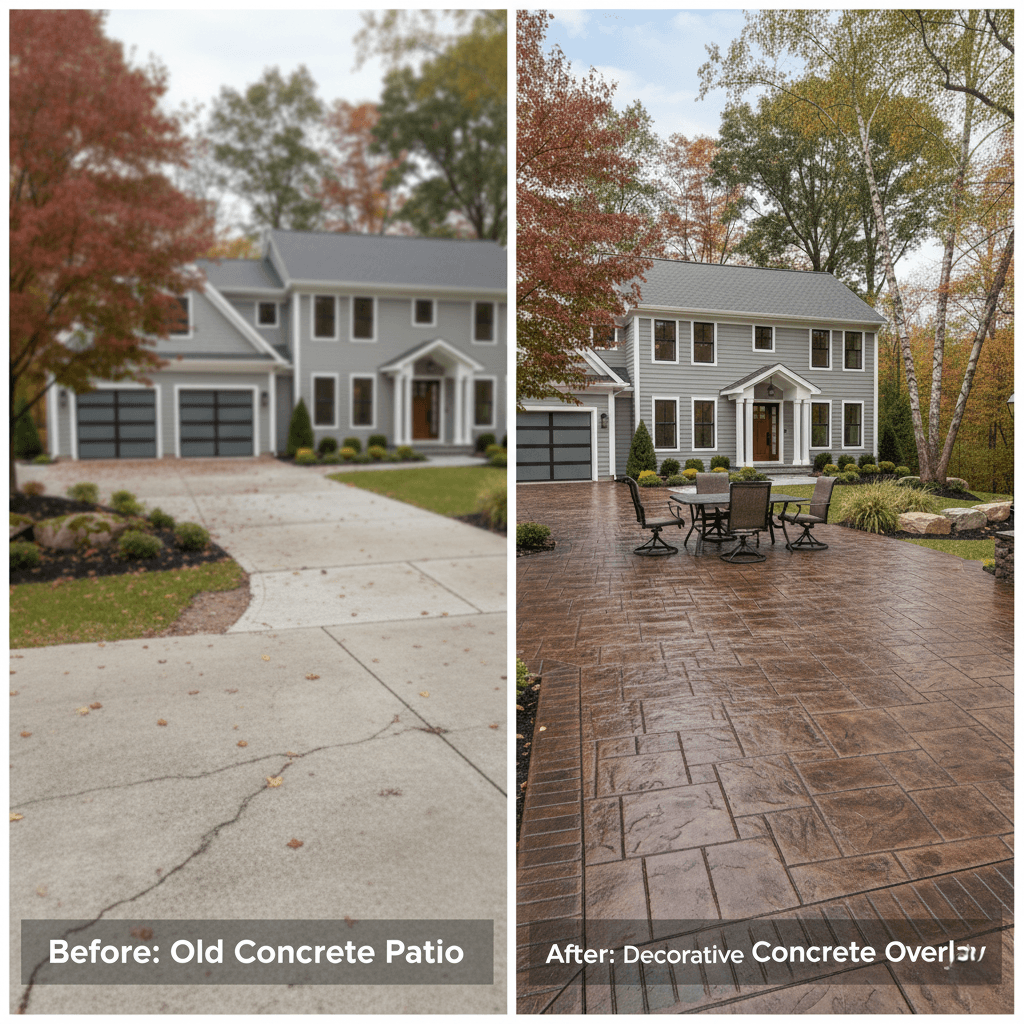
Modern concrete driveways offer many design options for homeowners looking to enhance the aesthetic appeal of their homes. Beyond the traditional gray color, stamped patterns, colored concrete, and exposed-aggregate finishes provide homeowners with a wide variety of options to create a beautiful driveway. However, decorative options require specialized techniques and can also add significant expense to the cost of the driveway.
Homeowners living in the historic neighborhoods of Springfield, such as Court Square, may find that a driveway design that complements the style of their home would be beneficial to preserve the aesthetic of their neighborhood. Homeowners seeking recommendations and samples for a custom driveway should consult with a qualified contractor who specializes in designing driveways for homes in Springfield.
Placement of Expansion Joints
Expansion joints are designed to accommodate the expansion and contraction of the concrete due to temperature fluctuations. The placement of the expansion joints depends upon the thickness of the slab, with joints placed approximately every 10 feet in 4-inch-thick slabs. If the slab is thicker than 4 inches, the distance between each joint will be proportional to the difference in thicknesses.
It is imperative to install expansion joints correctly to prevent uncontrolled cracking and to prolong the lifespan of the driveway.
Budgeting and Pricing
The cost of a Springfield concrete driveway varies greatly depending upon the dimensions of the driveway, the thickness of the slab, the type and quantity of reinforcement, and the type of finish applied to the surface of the driveway. Standard residential driveways are typically priced anywhere from $8 to $12 per square foot, with prices increasing for decorative finishes. Costs for site preparation will also vary depending on the difficulty of preparing the site for the driveway, specifically for areas with difficult soil conditions.
Additional costs associated with the construction of driveways include the cost of obtaining any required permits, coordinating utilities, and addressing complex drainage issues. Homeowners should request several bids from qualified contractors to establish a budget for their project and to ensure that the contractor selected is capable of completing the project successfully.
Maintenance Plan
Maintenance of your concrete driveway is essential to preserving its appearance and extending the lifespan of the driveway. Annually, sealants should be applied to protect the concrete from moisture intrusion and subsequent freeze-thaw damage. Repairs to any cracks in the driveway should be addressed promptly to prevent further deterioration.
Springfield’s cold winters require caution when removing snow from the driveway. Avoid using chemical deicers, as these products will damage the concrete surface.
Begin planning for the maintenance of your driveway as soon as possible, as part of the initial planning process. This will enable you to plan for the accessibility of the driveway for future repairs.
At Springfield Concrete Masters, we specialize in residential driveway construction throughout Springfield. We provide complete concrete driveway installation services that adhere to all local requirements and specifications. At Springfield Concrete Masters, we understand the harsh climate of Springfield, and our driveway installation services will ensure your driveway meets the requirements of your community and provides you with years of durable service.
LATEST POSTS