
Menu
Concrete Paths & Walkways: Springfield Installation Guide
Concrete Walkway Springfield
The best way for a homeowner in Springfield to get the right type of walkway that is durable and aesthetically pleasing is by learning how to install a concrete walkway using an appropriate method for the harsh climate conditions of Massachusetts. A professional installer will help ensure long-lasting use of your walkway as you go through New England’s freeze-thaw cycle, with it being a safe, functional path, which also adds to the overall value of your home and its curb appeal. The initial steps in making sure you have a successful concrete walkway project involve planning. This includes determining the condition of the soil where the walkway will be installed; assessing the need for drainage; and researching and complying with all applicable local building codes. Quality concrete walkway construction is multi-phased and begins with site preparation, continues through to the finish process, and each phase is important to achieving optimal results. The expansive soils and varied weather patterns of Springfield require specific installation methods to prevent premature failure and costly repairs. By understanding these requirements, homeowners can make informed decisions on materials, contractors, and the timing of their walkway projects.

Planning and Design Considerations
The installation of successful concrete walkways in Springfield projects is dependent upon a well-planned approach to functionality, aesthetic appeal, and local requirements. Most standard residential walkways are 3-4 ft wide, which will provide ample room for comfortable pedestrian access as well as sufficient room for wheelchair and maintenance equipment access. The path layout for walkways should follow the natural traffic flow of pedestrians while avoiding underground utilities and tree roots.
Depending on the location of the walkway, there may be a requirement by the City of Springfield to obtain a permit prior to constructing the walkway if it connects to a public sidewalk, impacts drainage patterns, etc. Areas surrounding Springfield College may also have additional requirements based on pedestrian traffic considerations. Design aspects of walkways can include curves, borders, and various types of surface textures to add visual appeal to the walkway as well as provide functionality.
Site Assessment and Utility Location
A thorough site assessment is conducted to identify potential problems with the site, including soil conditions, drainage patterns, and other factors that will impact the installation of the walkway. It is necessary to locate and mark all underground utilities before beginning excavation to prevent damage to the utilities as well as interruption of service to neighboring properties. A well-planned approach will ensure that the walkway does not disrupt existing landscaping features while providing adequate drainage away from adjacent structures.
Excavation and Site Preparation
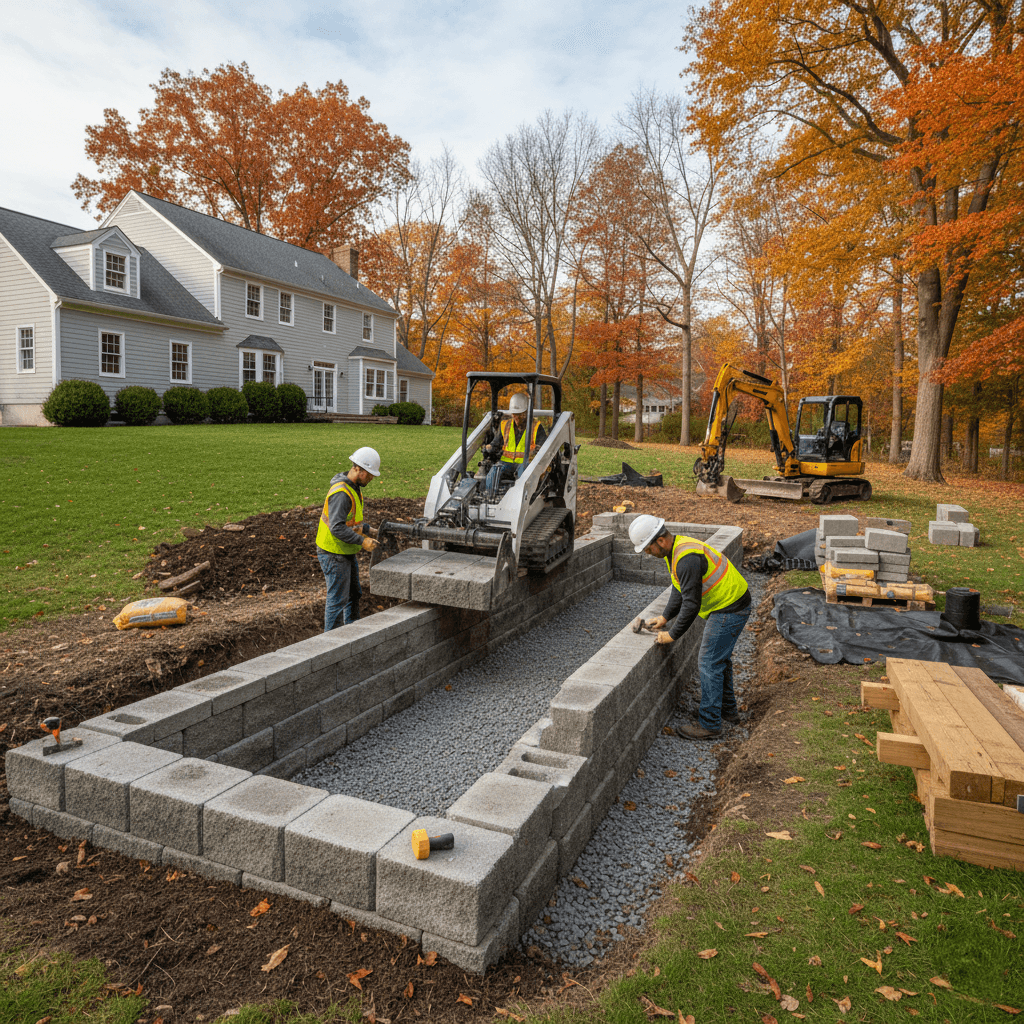
Preparing the site properly by excavating to an adequate depth will provide a stable base for the walkway and help to prevent issues such as settling and cracking of the walkway. The standard excavation depth for most walkways is 6-8 inches deep, and this is to allow for 4 inches of concrete thickness plus the base material. Due to the unstable nature of Springfield’s clay soils, it is important to handle these soils with care, especially when they are moist and prone to sliding.
Subgrade preparation involves the removal of any organic material (vegetation), roots, and debris that can cause settling. Plate compactors are used to compact the subgrade to provide even support for the walkway, preventing uneven settling. Properties in the Forest Park area may have difficult soil conditions that may require additional stabilization of the subgrade.
Base Material Installation
Providing drainage and frost protection are two of the primary reasons why granular base material is required for walkways in Massachusetts. The typical base material is 2-4 inches of compacted gravel or crushed stone that has been properly graded to provide adequate drainage. Providing a layer of base material under the walkway will protect the walkway from frost-heaving and will provide a solid platform for placing the concrete.
Forming and Reinforcement
Professional forming systems are designed to provide accurate dimensions of the walkway while providing a containment system for the concrete during placement. The forms are usually made of 2×4 lumber and are staked in place to ensure they do not move during the placement of the concrete. Properly built forms include provisions for expansion joints to be placed every 4-6 feet along the length of the walkway to help prevent random cracking of the walkway.
Reinforcement options for residential walkways include either welded wire mesh or fiber reinforcement, depending on the expected load and soil conditions. Welded wire mesh is the most commonly used form of reinforcement for residential walkways and is installed at mid-depth within the concrete slab. Properties near the Memorial Bridge area may require additional reinforcement due to increased traffic volumes.
Expansion Joint Planning
Expansion joints are designed to accommodate the thermal movement of the walkway and help prevent random cracking of the walkway caused by temperature changes. The spacing of the expansion joints will depend on the thickness of the concrete, but for most walkways with 4-inch thick concrete, expansion joints are spaced no farther apart than 8-10 feet. When installing expansion joints, they should be fully cut to depth so they can be filled with an approved sealer.
Concrete Mixing and Specifications
Due to the harsh winters experienced in Massachusetts, the specification for concrete walkways must include certain design parameters to provide a durable product that will perform well through multiple freeze/thaw cycles. For most residential walkways, the minimum specification for the compressive strength of the concrete is 4000 psi, and it should contain a minimum of 5-7 percent air entrainment to provide protection from freezing temperatures. The balance of the workability and long-term performance of the concrete is a critical factor in the success of the walkway.
Ready-mix concrete is used to provide consistent quality and correct batching of the ingredients to produce optimal results. The design of the walkway also includes the slump specification for the concrete to allow for proper placement and finishing. Commercial-grade mixes that are specifically designed for the New England climate are available for use in residential walkway construction in Springfield.
Quality Control Measures
Before the concrete is placed, the contractor must inspect the materials to ensure that they comply with the specifications and designs of the walkway. The contractor should monitor the temperature to ensure that the concrete is not placed during extreme temperatures that would affect its quality. Documentation of the installation process is maintained to provide warranty coverage and references for any future maintenance.
Placement and Finishing Techniques
The placement of the concrete is a coordinated effort to ensure that the thickness of the concrete is uniform and properly consolidated. The placement of the concrete is done from one end of the walkway and works towards the opposite end to prevent the creation of “cold joints”. The final step of preparing the concrete surface is to level the concrete using a screed to remove any excess material and provide a uniform surface. After leveling the concrete, the finishing operation is performed to float the concrete, edge the concrete, and texture the concrete to achieve the desired surface characteristic.
Surface Texture Options
Broom-finished walkways provide good traction while being easy to maintain and clean. Stamped concrete walkways offer decorative options at a moderate price increase compared to broom-finished walkways. Exposed aggregate finished walkways offer attractive and durable finishes for high-traffic applications.
Curing and Protection
To develop the full strength of the concrete, proper curing is necessary and will help prevent surface defects and premature deterioration of the concrete. Recommendations from the Massachusetts walkway planning guide suggest that a minimum of a 7-day curing period is necessary to allow for adequate moisture retention. Methods of curing include spraying the concrete with water, covering the walkway with wet burlap, or applying a liquid membrane compound to the surface of the concrete.
Protection of the concrete from the elements is critical to prevent damage from extreme temperatures or excessive drying out of the concrete. In order to protect the walkway from freeze-damage, winter installations of concrete should be enclosed and heated. Summer installations of concrete should be protected from direct sunlight by shading the concrete and by frequently watering the concrete to prevent excessive evaporation of the water from the surface of the concrete. Contractors who specialize in the installation of concrete walkways know what precautions are necessary to take to ensure optimal development of the concrete.
Timeline and Traffic Restrictions
Light foot traffic is allowed on the walkway after 24-48 hours, depending on the weather conditions. Although the walkway will reach its full strength after 28 days, the walkway can be used immediately after that timeframe. However, heavy traffic should not be allowed on the walkway until after a minimum of one week to prevent damage to the surface of the walkway and to the expansion joints.
Drainage and Water Management
In addition to preventing the accumulation of water on the surface of the walkway, proper drainage is also needed to prevent water from accumulating under the walkway. To accomplish this, the walkway surface must have a minimum of 1/4 inch per foot slope, which will direct the water away from the buildings and toward an outlet. In designing a walkway, drainage requirements in Springfield must also include consideration of seasonal runoff and snowmelt.
If necessary, subsurface drainage can include French drains or permeable base materials to prevent water from accumulating underneath the walkway. Properties in the Sixteen Acres area of Springfield may require additional drainage due to the unstable nature of their clay soil. When installing the drainage system, a long-term plan for managing the water should be developed to prevent future problems.
Winter Maintenance Considerations
Proper drainage of the walkway will reduce the amount of ice that forms on the surface of the walkway, and chemically resistant concrete will protect the walkway from deicing chemicals. The design of the walkway should include consideration of the locations where snow will accumulate and create ongoing maintenance challenges. Access and storage for snow removal should also be strategically included in the design of the walkway.
Quality Control and Inspection
After the walkway is constructed, the contractor should conduct a final inspection to determine if the walkway was installed according to the plans and specifications, and if the walkway complies with the applicable building codes in Springfield. During the inspection, the contractor should verify that the thickness of the concrete is uniform, that the reinforcement is properly placed, and that the expansion joints are installed correctly. If the contractor provided documentation of the installation, it will serve as proof of warranty coverage and as a reference point for any future maintenance.
Final inspection should confirm that the walkway has adequate drainage, the surface of the walkway has the desired texture, and that the overall quality of the construction is satisfactory to the client. Because Massachusetts has specific testing and documentation requirements for commercial walkways, homeowners in Springfield can expect similar quality assurance measures for their residential walkways.
Warranty and Maintenance Planning
When hiring a professional to construct a walkway, the contract should include a warranty that protects the homeowner’s investment against defective work and premature failure. The maintenance plan for the walkway should address any sealing requirements, joint maintenance needs, and cleaning requirements. Regular maintenance will extend the lifespan of the walkway significantly longer than the homeowner could reasonably expect.
We provide complete concrete walkway installation in Springfield and specialize in high-quality residential walkway construction that exceeds the expectations of our clients and provides them with a safe and attractive way to travel around their homes while withstanding the harsh winters experienced in Massachusetts. With years of experience and expertise in providing quality walkway construction, Springfield Concrete Masters is committed to providing exceptional customer service and satisfaction to each of our clients.
LATEST POSTS