
Menu
Springfield Decorative Concrete Overlays for Old Slabs
Decorative Concrete Springfield
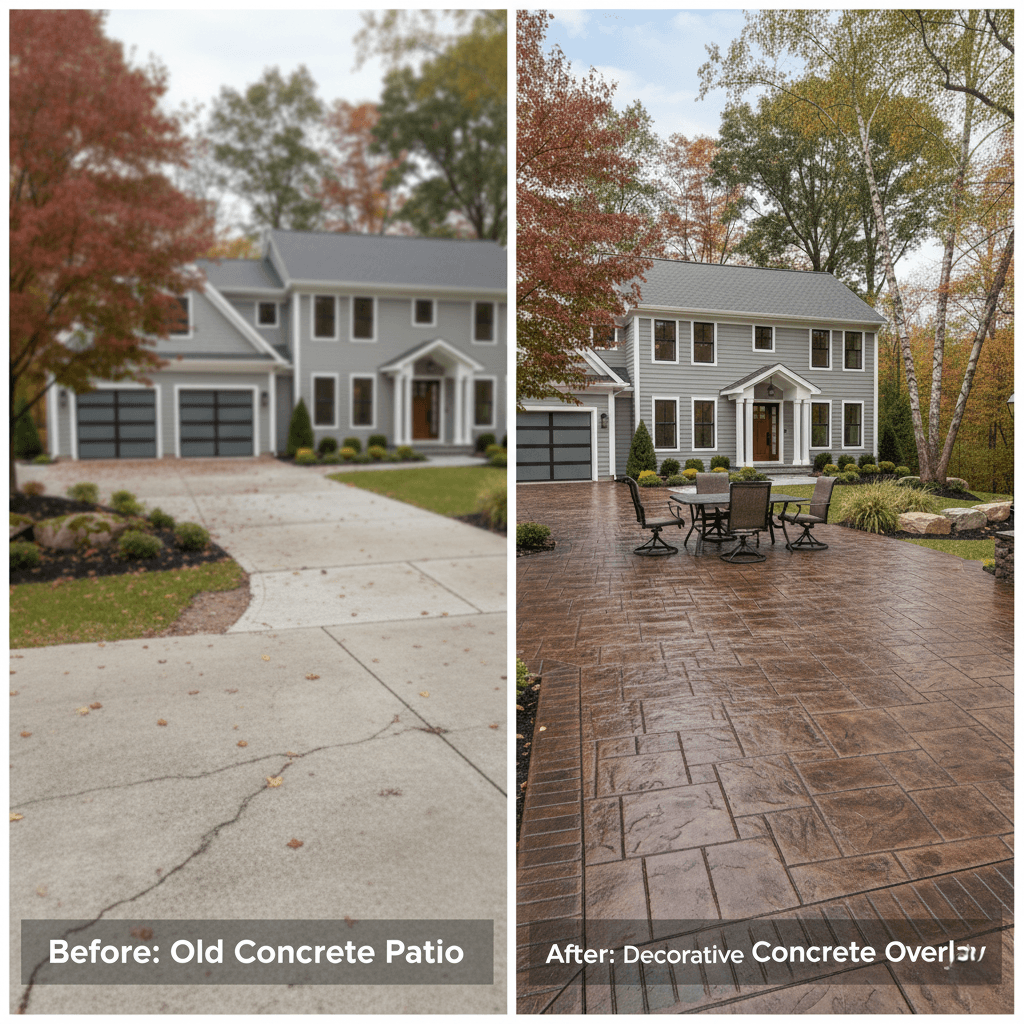
Homeowners in Springfield who have older or worn-out concrete areas of their homes find ways to make repairs affordable using an overlay, which allows them to give old driveways, sidewalks, and patios a new look. Decorative concrete overlay is a low-cost way for homeowners to get a great visual improvement on their existing home and also correct small cracks and other minor imperfections found on many Massachusetts properties. Overlay installers know regional weather and soil issues that can affect how well decorative overlays perform long-term and last. Compared to traditional concrete repair, modern decorative polymer-modified overlays offer improved bonding to the existing concrete as well as longer-lasting performance than the products used in past decades. Installing decorative overlays will increase the lifespan of the surface area they are installed in, as well as greatly improve the appearance and value of a home within the Pioneer Valley region.
Understanding Decorative Concrete Overlays
The Overlay System consists of a polymer-modified cement mixture applied to an existing concrete slab to create a decorative surface. The thickness of the overlay system will be determined by the designer and the condition of the existing surface, and may be as thin as 1/16” or as thick as 2”. Modern overlay products have advanced bonding agents that ensure a permanent bond to a substrate that has been properly prepared, and that eliminate the possibility of delaminating.
Decorative Concrete Overlays are resistant to freeze/thaw damage; however, the cyclic nature of freezing and thawing in New England makes it imperative to use materials that are designed to withstand these conditions. Reinforcement by fibers prevents cracks in the overlay system while still allowing for natural movement due to thermal expansion and contraction. Installations of decorative concrete overlays are considered to have a 15-20 year lifespan, provided the overlays receive regular maintenance and are sealed periodically.
Types of Overlays and Their Uses
- Stained overlays utilize either integrated or topically applied coloring that permeates the surface of the concrete to produce a permanently colored surface.
- Stamped overlays replicate the appearance of natural stone, brick, and tile through the technique of applying a textured pattern prior to the final set of the overlay.
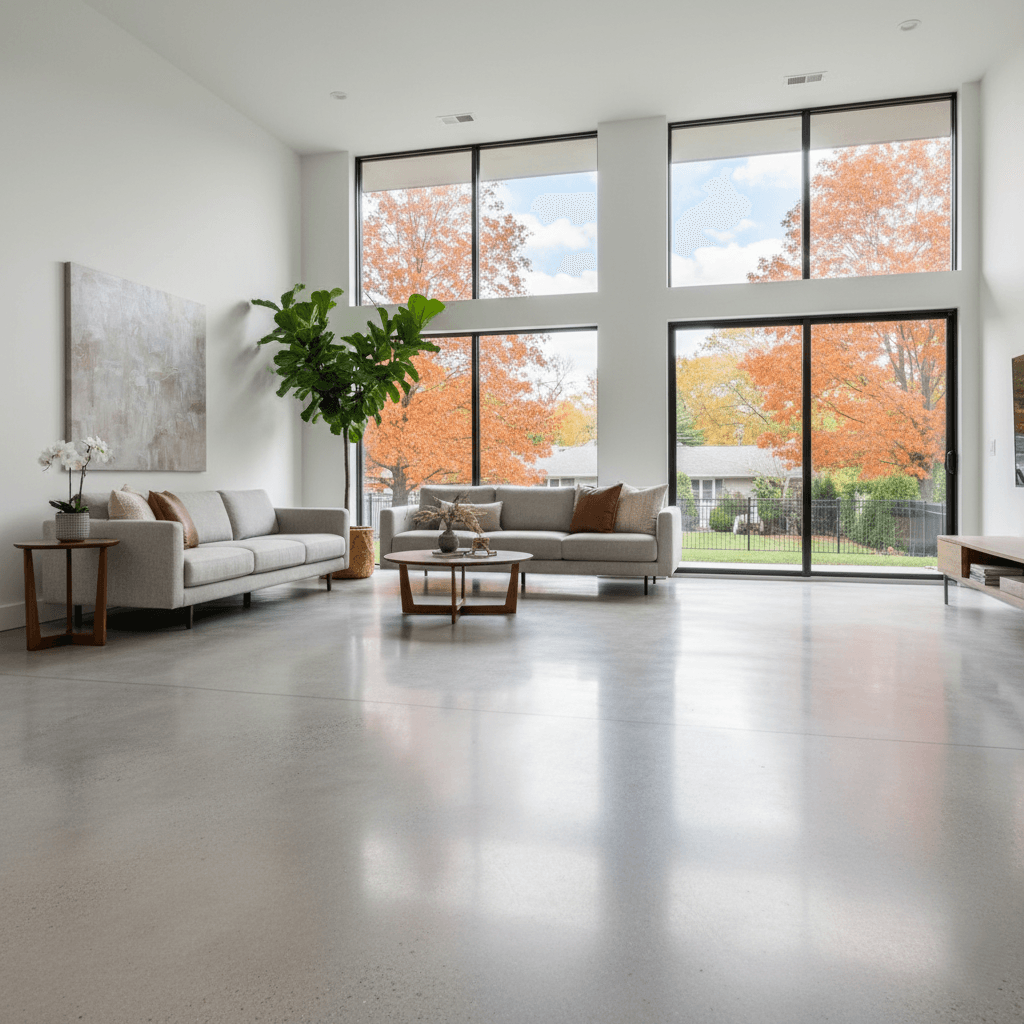
- Micro-toppings provide a smooth, seamless finish to interior and exterior surfaces, and are ideal for designers who prefer a clean, contemporary look.
- Self-Leveling overlays are used to level uneven surfaces while also producing a perfectly flat surface for the placement of furniture and other items in outdoor entertaining areas.
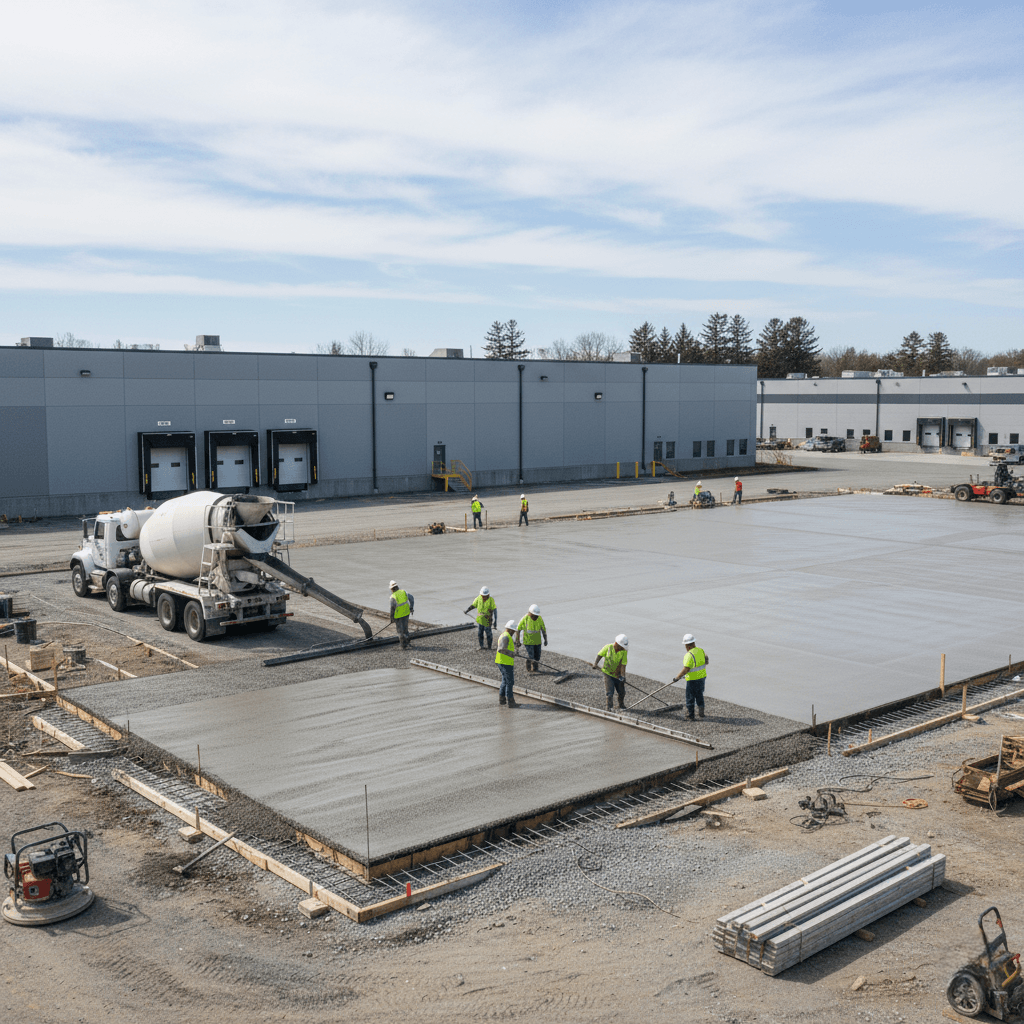
- Spray-Applied overlays are used for large-scale applications and provide a uniform thickness and appearance.
- Overlay Systems may also be combined with one another to produce a custom design that meets the needs and desires of each client.
Springfield Decorative Concrete Overlay Pricing
Pricing for decorative concrete overlay installations in Massachusetts will vary from $6-$10 per square foot for basic installations that include simple color integration. More complex installations that include multi-colored designs with intricate patterns can be priced at $20-$25 per square foot, depending upon the amount of labor involved and the materials needed. In addition to the price of the decorative concrete overlay itself, site-preparation costs will vary from $1-$3 per square foot, depending upon the extent of the preparation required (crack repair and surface grinding).
As previously mentioned, project size will greatly impact the pricing of an overlay installation, and the larger the project, the greater the benefit of being able to mobilize equipment to the site. A small residential patio installation may cost anywhere from $2,000-$5,000 for the complete installation, including preparation and sealing. Larger residential driveway resurfacing projects can cost anywhere from $3,000-$8,000, depending upon the size of the project and the complexity of the design.
Benefits of Comparing Prices of Overlay vs. Replacement
Overlay installations of decorative concrete are far less expensive than the complete replacement of old concrete and yet offer similar aesthetic benefits. The expense of demolition and disposal of old concrete is usually greater than the total cost of an overlay installation for the same size area. The time savings associated with overlay installations are also very significant. Most overlay installations take only 2-3 days to complete, whereas most complete concrete replacements take several weeks to complete.
The increase in property value resulting from decorative overlays is typically in excess of 70-80% of the cost of the installation when the property is sold. Attractive curb appeal enhances the salability of a property while demonstrating a homeowner’s commitment to property maintenance. The long-term cost benefits of decorative overlays include the lower maintenance costs associated with the overlay compared to older concrete surfaces.
Requirements for Preparing Surfaces for Overlay Installation
A successful decorative concrete overlay installation depends upon adequate preparation of the existing surface. Cleaning of the surface to remove dirt, grime, and other contaminants that would inhibit the ability of the overlay to bond properly is an absolute requirement. Crack repair using flexible sealants will allow for slight movement of the concrete without compromising the integrity of the overlay. Mechanical abrading of the surface to provide a suitable substrate for bonding will ensure a quality installation. Pressure washing of the surface to remove dirt and grime is also important to ensure good bonding between the existing surface and the overlay. Chemical etching of the surface provides additional penetration of the overlay into the concrete and further enhances the mechanical locking mechanism.
Assessing the Climate of Springfield
Freeze-thaw cycles in the Northeast U.S. make specialized overlay formulations that are flexible and contain air-entraining agents necessary for successful installations. It is also crucial to install overlays during optimal temperature ranges to promote proper curing and ultimate strength. Spring and Fall are generally the best seasons for installing overlays due to the ideal temperature ranges that promote good bonding and curing.
Drainage assessments are performed to determine if there will be standing water around the perimeter of the installed overlay. Properly sloped and graded drainage systems will direct water away from structures while promoting a visually appealing finish. Winter protection is provided by recommending the use of deicing chemicals that will not damage the overlay and its intended long-term durability.
Variety of Designs and Aesthetics
Earth-tone colors are available and blend well with the natural surroundings and architecture of Springfield and the surrounding neighborhoods, particularly those located along the Connecticut River Corridor and near the Springfield Armory National Historic Site. A wide variety of textured finishes are available and can range from contemporary smooth finishes to rustic stone finishes, which are ideal for homes located within historic districts.
Patterns and accents create visual interest and help to define outdoor living spaces. Seamless transitions between various surface types promote continuity in the overall design and address a wide range of functional requirements. Consultation with a professional designer will assist in achieving the desired result and enhancing existing landscape features.
Regional Design Trends
Homeowners in Springfield tend to design their landscaping to fit the traditional New England architectural style while meeting the modern functional requirements of today. Traditional designs that mimic natural stone finishes work well with Colonial and Victorian-style homes common in the Pioneer Valley Region. Geometric patterns and designs that are more contemporary are ideal for newer subdivisions that have a more urban feel, but respect the character of the neighborhood.
Seasonal changes and year-round appearance requirements are taken into consideration when selecting colors for the decorative concrete overlay installation. Colors selected should be resistant to fading caused by the intense sunlight in the summer months, and should be able to maintain their original color throughout the winter months when exposed to snow and ice.
Overview of Installation Process
A comprehensive evaluation of the substrate is completed by professionals before the installation process begins to identify and address any potential problems that may arise before the overlay is applied to the surface. The surface-preparation process is done in a methodical and sequential manner to provide the best possible conditions for the overlay to adhere to the surface and perform optimally throughout its life expectancy. During the critical curing period, environmental controls provide the optimal temperature and humidity for the overlay to cure to its maximum strength and durability.
Different application techniques are utilized depending upon the type of overlay being applied. Spray-Application Systems are efficient and effective for large-scale applications and provide a uniform thickness and appearance. Hand-Troweled Applications provide precise control over the application of the overlay and are ideal for detailed and intricate work. Quality-control measures are implemented to ensure consistency in the thickness, color, and texture of the overlay throughout the entire installation area.
Timing and Scheduling
Scheduling the installation to occur during a period of time that minimizes delays and allows for the overlay to be cured under optimal conditions is essential to ensure the highest quality overlay possible. Coordinating the timing of the installation with all parties involved will minimize delays and disruptions to daily activities.
Protective Curing
During the initial curing period, protective measures such as restricting access to the newly installed overlay and providing protection from the elements will ensure that the overlay cures uniformly and develops to its maximum strength and durability. After the initial curing period, applying a sealer to the overlay will protect it from surface degradation and maintain its color and texture. Following the manufacturer’s recommended guidelines for the application of a sealer will ensure that the sealer penetrates the surface of the overlay to the greatest extent possible and provides the longest duration of protection.
Inspecting and Maintaining the Overlay
Cleaning the surface of the overlay regularly with mild detergent and a soft brush will remove debris and stains that could potentially degrade the surface. An annual inspection will detect any potential issues before they become costly repair requirements. Maintenance companies specializing in decorative concrete will provide comprehensive maintenance services that include cleaning, minor repairs, and sealer reapplication.
Applying Sealers
Applying sealers to the decorative concrete overlay at intervals of 3-5 years will extend the life of the overlay and maintain its color and texture. High-quality sealers provide stain-resistance and improve slip-resistance to ensure safety.
Preventing Problems
Scaling of the surface of the decorative concrete overlay resulting from freeze-thaw damage can be prevented by utilizing high-quality materials and proper installation techniques. Preventing stains on the decorative concrete overlay will depend upon the immediate cleanup of spills and the regular maintenance of the sealer. Damaging the decorative concrete overlay due to heavy traffic will be dependent upon the selection of the proper thickness of the overlay and the inclusion of sufficient fiber reinforcement.
Troubleshooting Minor Issues
Minor problems related to the decorative concrete overlay will be addressed by professionals to prevent them from becoming major repair requirements. Early detection of minor problems will provide the opportunity to correct them promptly, thereby preventing costly repairs and maintaining the appearance and performance of the decorative concrete overlay. Periodic evaluations by a professional will ensure that the decorative concrete overlay remains in optimal condition throughout its expected lifespan.
Springfield Concrete Masters specializes in the transformation of aging concrete surfaces into beautiful and durable surfaces through professional decorative concrete overlay installations. We are knowledgeable about the local conditions and deliver superior results that enhance the property value and provide lasting beauty and functionality for both residential and commercial applications throughout the Springfield area.
LATEST POSTS